


Chemicals and Operational Methodologies
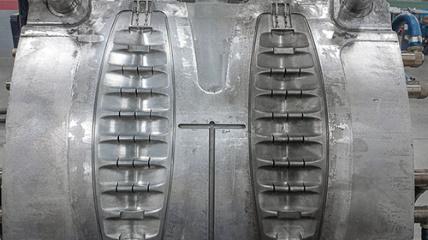
A clean mold will work efficiently for a long time without requiring extraordinary intervention. Deposits and accumulations of contaminants trigger corrosive phenomena in the mold and compromise the quality of the molded parts. Printer surfaces are particularly exposed to contamination and should be cleaned thoroughly. The die plates, extraction tables and press plates of the injection machine must also be kept clean, corrosion between these plates can cause misalignment which affects the distribution of clamping force and die wear.
Efficient cleaning must be thorough, rapid, avoid waste of product and energy, must not compromise treated surfaces, and must be as respectful as possible of human health and the environment. Mold cleaners play a key role. Using the wrong cleaner is a huge waste of time and labor.
There is no “universal” product and methodology that applies to all situations, different situations require a different approach. It depends on the nature of the contamination, the type of steel, the surface finish, the treatments present, the temperature of the surface to be cleaned, the working environment (clean room, food sector), whether the mold is mounted in a press or available on the bench. The “ideal” detergent is simply one with the chemical characteristics suitable for performing a specific job in a given application.
FOLLOWING ARE SOME SUGGESTIONS ON HOW TO CHOOSE THE CORRECT MOLD CLEANER AND THE CORRECT METHODOLOGY TO ADOPT BASED ON THE VARIOUS SITUATIONS.
TYPE OF CONTAMINATION TO BE REMOVED:
- Accumulations of light organic residues:
- Hydraulic oils:
- Lubricants
- Release agents
- Waxes and pastes
- Dust and various environmental contamination
In such cases, a valid fast evaporating degreaser with a powerful jet sprayed abundantly from top to bottom in the printer part is sufficient. Chemical action and solvent flow are able to remove this type of contamination without requiring mechanical action such as scrubbing or other interventions. The mold surface will be dry in an instant and can be restarted with the production process that in the first printed one will take away any residue left in the figure. This simple and quick procedure can be carried out during production between cycles at certain intervals as needed.
Recommended products:
- Fluid 050/H1 NSF (Jost) – aerosol can
- Safe-T-Clean NSF (Nanoplas) -aerosol can
- Accumulations of polymeric residues:
- Degraded plastic / carbon residues
- Aditive residues
- Tracce di master batch o coloranti
- Process fume/gas stains
- Old and tenacious contamination
In these cases, the accumulation of residues must be significantly reduced. A specific and powerful chemical formulation is needed that can dissolve polymer residues and break the molecular bonds between contamination and steel and facilitate their removal. Often the chemical action of the solvent is not sufficient, manual mechanical action with cotton cloths or abrasive sponges is necessary if the surface allows it. The solvent must be slow evaporating to allow the active ingredient to process and soften the polymer deposits to keep the surface wet while manual action is carried out.
Recommended products:
- Clean & Run (Nanoplas) – spray can
- Formclean Plus (Jost) – aerosol can
- Zapox NSF (Nanoplas) – aerosol can
- Scotch brite Ultra fine cotton cloths or synthetic sponges
- Oxidation and corrosion:
- Oxide stains
- Surface rust
- Moisture stains
- Residues from cooling water
In the presence of oxide stains or in a more advanced stage of actual corrosion, it is essential to use a cleaning product with a specific acidic PH to remove oxidation and neutralize the corrosive effect. The ideal product to treat the printer part is ZAPOX, a creamy emulsion with a unique chemistry capable of removing stains and performing a deep cleaning on all surfaces avoiding the use of aggressive acidic solvents or abrasive mechanical operations.
Recommended products:
- Zapox (Nanoplas) – prodotto cremoso ideale per rimuovere le macchie
- Zapox No Grit (Nanoplas) – specific version for mirror-polished surfaces
- Scotch Brite Synthetic Sponges
- Non-abrasive sponges/cloths for mirror polished surfaces
TEMPERATURE OF THE SURFACE TO BE CLEANED:
Surface temperature greatly affects the effectiveness of a cleaning cleaner.
- Fast evaporating solvents work very well on molds at room temperature but are useless on hot surfaces (50°C and above), in fact they tend to evaporate too quickly and the active ingredient loses complete effectiveness.
- Slow evaporating solvents are formulated to remain active for a long time in contact with hot surfaces and allow the contamination to be chemically dissolved, and they also keep the substrate wet for the time necessary to perform effective manual cleaning. However, they are not suitable on cold molds as they take too long to evaporate and leave residues that require manual removal.
Recommended products:
- Fluid 050/H1 NSF (Jost) – spray can – UP TO MAX 50°C
- Safe-T-Clean NSF (Nanoplas) – spray can – UP TO MAX 50°C
- Clean & Run (Nanoplas) – spray can – UP TO MAX 80°C
- Zapox (Nanoplas) – emulsion (mix with WD40 on hot surfaces)
- Zapox No Grit (Nanoplas) – (mix with WD40 on hot surfaces)
- FINISHING OF THE SURFACE TO BE CLEANED
- If the surface to be cleaned has a mirror finish or light photo-etching/embossing, only fast evaporating detergents that leave no residue and do not require manual activity on the surfaces should be considered.
- In cases of hot mirror surfaces or hot photoetched surfaces contaminated by stubborn gas/smoke stains or oxide stains penetrated into the steel, a non-abrasive stain remover product such as Zapox No Grit is required. In this case, the Zapox No Grit should be mixed with a little WD40 to allow it to work effectively on the hot surface. The emulsion is left to act for a few minutes after which it is removed with a low-fluff-releasing microfiber cloth for high temperatures.
Recommended products:
- Fluid 050/H1 NSF (Jost) – spray can – UP TO MAX 50°C
- Safe-T-Clean NSF (Nanoplas) – spray can – UP TO MAX 50°C
- Zapox No Grit (Nanoplas) – (mieszaj z WD40 na gorących powierzchniach)
CLEANING HOT MOLD IN MACHINE AND GASEOUS RESINS
Thermoplastics containing complex chemical and physical additives create deposits on the mold surface composed of very strong and difficult-to-remove intramolecular bonds. The same applies to fire-retardant materials and resins that release corrosive gases that adhere firmly to the mold wall.
In these cases, a two-stage cleaning is necessary:
- Spoon a powerful, slow-evaporating cleaner formulated for high temperatures that can remain in contact with the hot topfice long enough to soften and break strong bonds between mold and contamination. Energetic manual action is also often required to remove residue build-up.
- Once the surface contamination is removed, dark spots often remain that have penetrated the steel; spread a SENATOR abrasive cream in these stubborn areas if the surface allows (unpolished and unembossed) or a Zapox No Grit penetrating non-abrasive cream (on polished or embossed surfaces). Leave to act for a few minutes then rub with a suitable cloth to remove the cream.
Recommended products:
- Clean & Run (Nanoplas) – spray can
- Senator (Autosol) – heat-resistant abrasive cleaning paste
- Zapox No Grit (Nanoplas) –(for hot surfaces mix it with WD40)
Work Environment
If the molded parts are used in the food or medical field, it will be necessary to clean the molds with detergents and cloths equipped with the necessary requirements and certificates. Our product range includes detergents, stain removers, cloths with NSF or FDA certification.
Services: